Product Photography Process: How to Avoid Costly Mistakes

Updated: Jun 8
Product Photography Process: How to Avoid Costly Mistakes Before Your Shoot

There’s a moment almost every client goes through before starting a product shoot.
It's not doubt in the photographer.
It's not even doubt in the product.
But a quieter concern:
💥“What if we miss something important?”
This is especially true for brands with:
Complex products
Strict brand colors
Early-stage ideas (sometimes before a website even exists)
There are a lot of moving parts. A lot of decisions. And naturally — the fear of getting it wrong.
The good news is:
Product photography doesn’t have to feel uncertain. When the process is structured correctly, it becomes clear, manageable, and collaborative.
😵💫 Why Product Photography Can Feel Overwhelming
Most of the stress doesn’t come from the shoot itself.
It comes from everything leading up to it.
Questions like:
What style should we choose?
What details matter most?
What if something looks off once we see the final images?
In fact, the more thoughtful the client is, the more these questions tend to come up.
And that’s exactly where a structured process makes the difference.
🧱 What a Structured Product Photography Process Looks Like
In my experience, the strongest results don’t come from trying to solve everything at once.
They come from moving step by step. Together.
🧭 Defining Direction (Before the Shoot)

We start with references — not just what looks “nice,” but what actually fits the brand.
We look at:
Lighting styles
Composition
Mood
Visual references that feel aligned
This stage creates clarity.
And once that clarity is there, decisions become much easier.
🔍 Understanding the Product Details
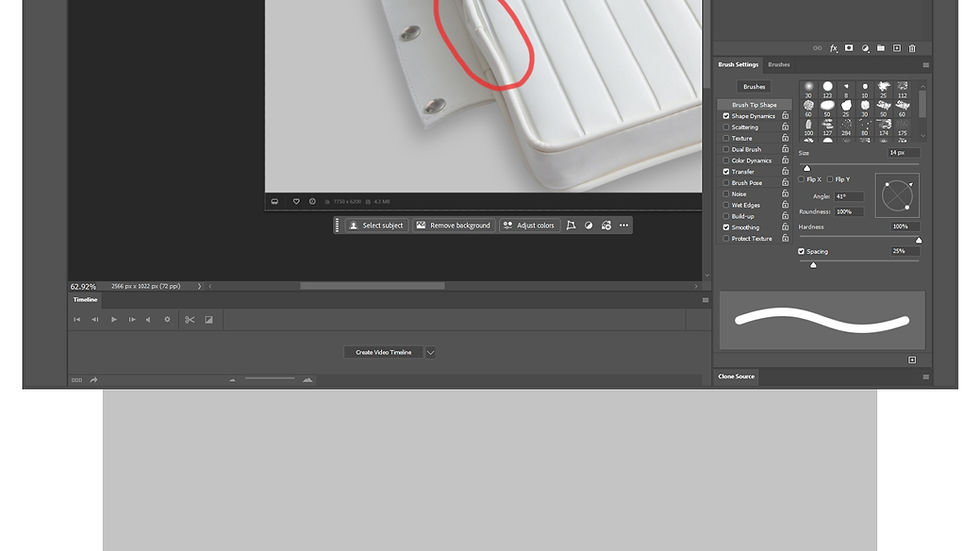
Every product has its own specifics.
Sometimes very precise.
For example: One client needed every seam on their product to appear perfectly smooth.
We discussed it early — and made sure every piece was adjusted before shooting.
Other times, the details are more subtle. Not mistakes. Not flaws.
Let’s call them sensitivities.
Things that need attention.
It could be:
The texture of a teapot handle
A very specific shade of gray
How a plate is positioned in a restaurant shot
These details don’t complicate the process. They define it.
📸 Execution with Clarity
By the time the shoot starts, we’re not guessing.
We’re following a direction we’ve already aligned on.
That doesn’t mean everything is rigid.
But it does mean we’re not starting from uncertainty.
This is where structure matters most.
Because clarity before the shoot removes stress during the shoot.
🧾 Refinement (Revisions)
Some decisions are obvious early.
Some only become clear once you see the images.
That’s completely normal.
This is why the process is built in stages. Not everything is meant to change at any moment. But the right things are always given space to be adjusted.
We:
Align first
Execute with that direction
Refine where it actually makes sense

💰 Avoiding Costly Product Photography Mistakes
Most “mistakes” in product photography don’t come from execution.
They come from lack of clarity.
Common issues include:
Unclear goals for the images
Trying to capture everything in one shoot
Not identifying key product details early
These are not failures.
They’re simply gaps in the process.
And once the process is structured correctly, they naturally disappear.
🔧 A Collaborative Process — With Structure
The goal is not to make every decision upfront.
And it’s not to leave everything open either.
The goal is balance.
👤 My role in this process is not just to execute. It’s to guide it. So you don’t have to second-guess every step. Because too much flexibility creates confusion just as much as too little.
Most of the time, what clients need is not more options — but a clear path forward.
🧠 Final Thoughts
If you’re feeling unsure before a product shoot — that’s normal.
It doesn’t mean something is wrong.
It means you care about getting it right.
And with the right structure in place, that uncertainty turns into clarity. Step by step.
📈 The Importance of Preparation
Preparation is key to a successful product shoot.
It sets the stage for everything that follows.
When you take the time to prepare, you can avoid many pitfalls.
Creating a Checklist
A checklist can be a game-changer.
It helps ensure that nothing is overlooked.
Consider including:
Product specifications
Desired styles and references
Key details to focus on
Communicating with Your Team
Effective communication is crucial.
Make sure everyone involved understands the goals.
This includes photographers, stylists, and anyone else on set.
Setting Realistic Timelines
Time management is essential.
Set realistic timelines for each phase of the process.
This will help keep everything on track and reduce stress.
🔗 Resources for Further Learning
If you're looking to dive deeper into product photography, consider these resources:
🔎 What Really Affects Pricing, Timelines, and Results in a Photoshoot
Brands often lose money not because the photos are bad — but because the preparation is wrong.
If you're planning a shoot or comparing studios, this guide will save you time, budget, and headaches. This is the guide brands use before booking a shoot — it helps avoid surprise costs and delays.
➡️ Q&A: Everything You Need to Know Before a Product Shoot (What affects pricing, timelines, prep, and outcomes).
➡️ Q&A: Calculator (for you to calculate costs in advance).
Keep Exploring
If you’d like to keep reading, here are a few related guides:
FAQ: Common Questions About Product Photography
How do I know what kind of product photography I actually need?
Most clients don’t come in with a fully defined plan — and that’s completely normal.
The goal isn’t to figure everything out in advance, but to start with direction. We usually begin with references and your goals, and build a clear structure from there.
Can things be changed once the shoot has started?
Some decisions are made early to keep the process efficient and focused.
However, there is always room for adjustment where it matters. The process is designed to be structured — but not rigid.
What if I notice something I don’t like after seeing the photos?
That’s exactly why revisions are part of the process.
Seeing your product in a final image often brings a new perspective. At that stage, adjustments can be made thoughtfully — without starting over.
Why does product photography pricing vary so much?
Because it’s not just about the number of images.
Product photography pricing depends on:
the type of content
production complexity
setup and styling
and the goal of the visuals
Two projects can have the same number of images, but completely different scopes.


Comments